If you’re a nursing mom, no doubt you’re concerned about your diet and what to eat when breastfeeding. After all, your baby is still dependent on you for nourishment just as she/he was while in the womb.
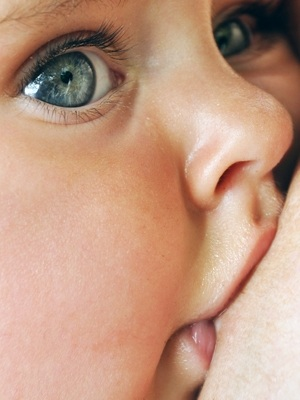 You may be anxious to get back to your pre-pregnancy weight. On the other hand, you don’t want to jeopardize your milk supply with crash dieting. Friends and relatives may be telling you to eat certain foods when breastfeeding in order to produce “rich milk”, or to avoid foods that may bother baby’s tummy.
Are you wondering if nursing moms need to be on a special diet in order to produce high quality breastmilk?
The simple answer is: NO.
Studies have shown that the milk of breastfeeding women from all around the world is nearly identical - and adequate for their own babies - despite considerably varied diets. So it’s not necessary to worry excessively about each bite of food you’re putting into your mouth. The most important factor in having a hearty milk supply is nursing baby frequently. The more baby nurses effectively, the more milk your body produces.
Are There Certain Foods To Avoid While Nursing?
You may have heard advice from friends and relatives such as: avoid “gassy” vegetables like onions or broccoli, or stay away from peanuts or milk while breastfeeding to avoid allergies in your baby. Do you need to avoid certain foods while breastfeeding?
 Again, no… with a few exceptions. There are no foods that all women need to avoid while nursing. Apply the common sense test here: if a particular food caused all babies problems, then women who live in an area that use that food heavily as part of their local cuisine would have very unhappy babies! Obviously that is not the case.
There is one exception the rule: trans fats (found in hydrogenated oils, margarine, fast food and other junk food) in mom’s diet do change the fat in breastmilk. So while a mom cannot control the quantity of fat in her milk through diet, she can control the quality. Trans fats aren’t good for anyone’s health, much less a nursing baby so it’s best to avoid them completely in favor of healthier fats.
In rare instances, your baby may be sensitive to certain foods you’re eating if s/he is allergic to that food. (And some babies grow out of these sensitivities when their digestive systems mature.) If your baby is showing signs of being allergic to a food you’re eating (the most common being wheat and dairy), you might want to cut that particular food out. Don’t be too quick to assume that baby is allergic, or you will needlessly stress yourself and limit your diet without just cause. If a baby is truly allergic, there will likely be multiple symptoms (severe/frequent diaper rashes, chronic runny nose/stuffiness, projectile vomiting or reflux, etc). Suspect food allergy if a close relative has allergies. Talk with your baby’s healthcare provider about this if you’re concerned.
What about gassiness?
Gassiness is common while baby is young and his/her system is maturing. It’s rarely cause for concern. Gassiness can be helped with frequent burping, small frequent feeds and nursing baby so that the milk flows more slowly (for instance lying on your back with baby on top, tummy to tummy with you). Foods mom is eating do NOT cause gassiness in the baby. This is technically impossible because gas in mom’s system is caused by fermentation of fibers in her intestines. The fiber in mom’s intestines cannot get into her blood, hence it cannot get into the milk and cause gassiness in baby. This is an “old wive’s tale” that is unfortunately very persistent despite being patently false. At one time, people also believed the world was flat!
What Kind Of Diet Will Support Breastfeeding?
Avoid cutting too many calories while nursing. If you’re eating less than 1800 calories a day, studies show that milk supply may be affected negatively. If a mom is not eating enough calories to support breast milk production, then her body will pull from her nutrient stores in order to make milk. Obviously this isn’t an ideal situation, and mom wouldn’t want to endanger her own long-term health, so it’s important for her to continue eating the same healthy diet she ate while she was pregnant.
A nursing mom usually finds that her appetite and thirst increase while she’s breastfeeding, and she should listen to her body’s cues. Breastfeeding moms should focus on whole foods and avoid junk food for the same reasons anyone else should - so they feel better, have more energy to care for their baby and enjoy good health.
One question about healthy diet that any mom, before eating a meal or snack, should ask herself is:”Would I feed this food to my baby once he’s eating solids?” If the answer is no, then she should avoid it.



 207
207 0
0 0
0 185
185 0
0
As a breastfeeding mother of four, I have always been a bit anxious about ‘losing the baby weight’ very soon after delivery. Even with exclusive nursing and exercise, my weight never just ‘fell off’. During the exhaustive days of the newborn period, I often found myself eating whatever I could put my hands on the quickest and sadly, sometimes that was a dozen of cookies 🙁
I now realize that the key is eating ‘clean’ and keeping processed foods to a minimum, which can be a challenge when you are short on energy and time.