Cloth diapers – not as old fashioned as you think!
 When I had my first child 13 years ago, money was very tight. Buying disposable diapers often meant not having enough money for gas, or worse - the utilities. Through absolute necessity, I bought the only cloth diapers I knew about - Gerber prefolds with added “sponge” filling, pins, and pull on plastic pants. I battled with them for a while, hand washing them in the sink when I couldn’t afford the Laundromat, sewing strips of Velcro onto the prefolds so I wouldn’t have to pin them, and then I began to learn about the wonderful world of modern cloth diapers!
Now, even as short a time as 13 years ago, modern cloth diapers were still comparatively expensive and only came in sizes - no adjustable size diapers. So getting a few snap or Velcro covers were a big deal, since they cost a pretty penny, and it meant NOT dragging poo down baby’s legs when I had to take the cover off.
Eventually my daughter potty trained, and left cloth diapers behind. My second child barely used cloth diapers, since he was in daycare. But when my third came along nearly 3 years ago, I was going to be a stay at home mom again, and I was delighted that not only could I use cloth again, but that the variety has boomed! Not only are there easy-to-use, one size pocket and all-in-one diapers in adorable colors and prints, the cost is minimal compared to sized diapers or even disposables!
Why Choose Cloth Diapers Over Disposable
There are so many reasons to choose cloth over disposables, that when some moms ask “why would you use those?” many cloth diapering mamas are speechless for a moment. The benefits are that great that for many it totally outweighs any perceived inconvenience involved in washing them.
Obviously, I got into cloth diapering to save money, and that’s a biggie. Parents can spend anywhere from $55 - $100 a month for an average of 30 months on disposable diapers and wipes, or they can have a single investment of $100 - $500 in cloth diapers, which will last potentially through more than one child. So, $1650 - $3000 for disposable diapers for one baby, or $100 - $500 that could diaper two or three babies? Sold!
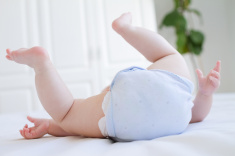 Another benefit of cloth is it tends to be healthier for babies’ skin. My toddler had a fire engine red tushie when we used the disposables given to us for his first weeks. After switching to cloth, his rash went away, only to come back the next time we used a disposable. We didn’t need further convincing. He was clearly sensitive to one or more of the chemicals in the disposable diapers, and frankly I thought they stunk, even when they were clean. Our little guy was hardly alone here, either - there have been horrifying photos circulating online of what appear to be chemical burns all over babies’ diaper areas from when Pampers added DryMax to their Baby Dry diapers.
Some people say they see earlier potty training from using cloth, since baby can feel when they’re wet. All I can say on that count is I’m still waiting for the toddler to notice!
And of course, there’s the environmental impact - a single disposable diaper will take FIVE CENTURIES to break down in a landfill. That means that if you wore disposables as a baby, somewhere they are still sitting in a landfill, with another 400+ years ahead of them. What a legacy, right? As much as 3% of all trash in landfills is composed of diaper waste, with 7.6 billion pounds added yearly. That’s a lot of plastic-wrapped poo!
Types Of Cloth Diapers Available
So in the modern world of cloth diapers, the style you choose can be as fancy or as simple as you like. There are:
All-In-One Diapers
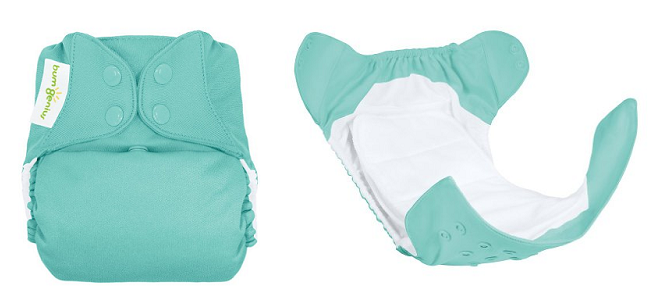
Abbreviated as AIOs, these are the fanciest of the fancy diapers - they are made to be as easy as disposables to put on and take off, making them sitter- and dad-friendly. They are made with the outer waterproof layer and the absorbent inner layer all sewn together, and fasten either with hook-and-loop tape (nobody actually says Velcro, as that’s a brand name) or snaps.
These tend to be the most expensive option, and they also take the longest time to dry - sometimes needing two cycles to dry fully. However, those that love them think the extra cost and drying time is completely worth the extra ease of use. Two dozen of these can cost around $500, more or less depending on brand.
Pocket Diapers
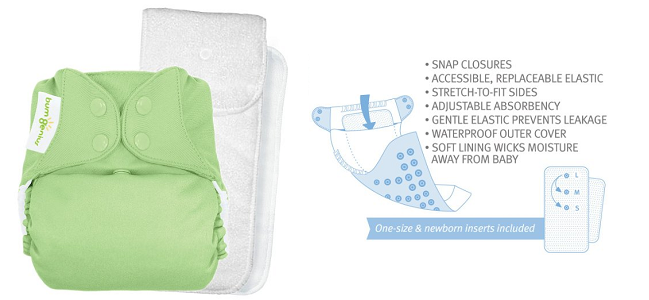
These diapers, usually adjustable in size from 8 lbs to 35 lbs, are made with a waterproof outer layer, an inner layer made of a moisture wicking fabric like microfleece or suedecloth, and a pocket in between that you stuff with absorbent inserts, and fasten with hook-and-loop or snaps. Since you can adjust the absorbency to your baby’s needs, can fasten easily, and you can remove the inserts so they can wash and dry more thoroughly and quickly, these diapers are a great convenient option for many families. Once a pocket is stuffed, it’s as easy to use as an AIO or a disposable, and the moisture wicking fabric leaves the baby’s skin feeling dry.
There are high quality name brands like BumGenius and FuzziBunz, which do cost a bit more, and made-in-China knock-offs like Alva which are considerably cheaper. Two dozen of these can vary in cost from $150 - $500 for a package deal.
All-In-Twos

AI2s (also known as hybrids) are something like all-in-ones, but instead of the absorbent layer being sewn in, it is snapped or laid into the waterproof outer. Being able to remove the absorbent part allows the diapers to dry much faster than AIOs, and gives the icky stuff fewer places to hide during washes. And because the insert is against the baby’s skin, if it’s just wet, you can remove the insert and put in a fresh one, while reusing the shell - that allows you to stretch your diaper stash a little further between washes.
Fitted Diapers And Covers
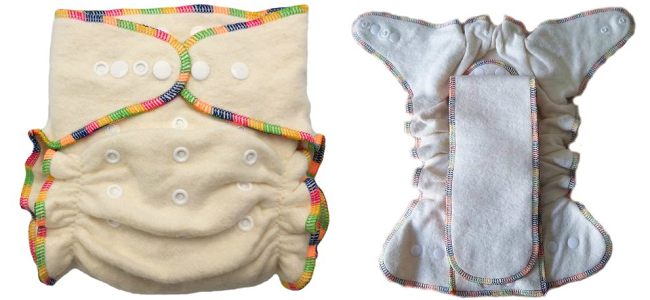
These are usually used as a night time solution, since fitted diapers will soak up an amazing amount of urine! Fitteds are absorbent cotton or other absorbent fabric, sewn with elastic and fasteners into the shape of a disposable. These have no waterproof layer, so a separate cover is needed.
Prefolds
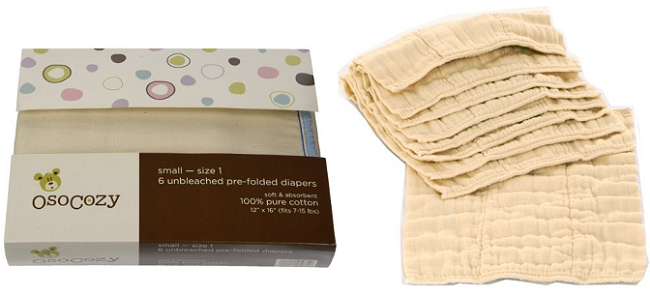
Prefolds are usually cotton diapers, sometimes hemp or bamboo, that are three panels wide, with the thickest material in the middle. These were the first big step toward making diapers a little easier to use, since before then the diapers had to be folded from 27” squares.
One day a diaper service owner named Mrs. Hellerman thought “what if I just sew these the way I usually fold them, then pin them on the baby?” She went to the makers of Curity diapers with her idea, and history was made.
They’re incredibly effective and absorbent, and because they’re made of natural materials, they tend not to hold onto stink or require special care to get them clean.
A word of caution - do NOT use Gerber or similar prefold diapers from big box stores - you will be very unhappy with your results. The best cloth diapers are available online, and are usually called Diaper Service Quality (DSQs).
To use prefolds, you can either fold them in thirds and lay them in the cover, or you can fasten them around the baby with pins or a Snappi (a stretchy device with little grabby teeth like on an Ace bandage grabber) then put on a cover. Just like AI2s, if the diaper is just wet, you can often reuse the same cover several times, helping you stretch your diaper stash.
Flats And Covers
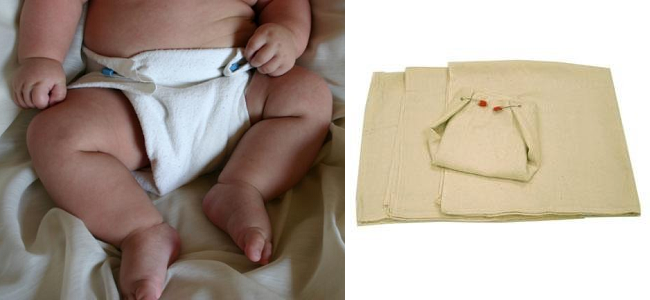
Utterly simple, but it’s amazing how intimidating flats can be until you try them! A flat is simply a single layer of cotton, anywhere from 27” – 33” square. If you want, you can fold them into fancy shapes (there are lots of tutorials available online) and pin or Snappi them, or you can simply fold them into a rectangular pad and lay them in a cover.
These diapers are super versatile, fit from birth to potty training depending on how you fold them, wash easily with no fussy detergents, and dry super fast - they’re even good to use if you have to have to wash your diapers by hand and line dry them. (I had to do a lot of line drying this summer when my dryer broke, and flats allowed me to keep cloth diapering until the dryer was fixed.)
Covers
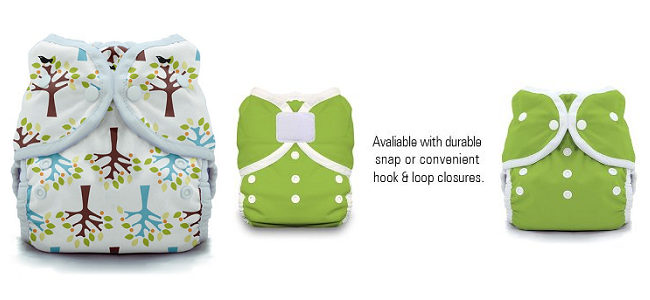
It seems worthwhile to discuss covers in their own right - in my opinion, they are what makes using prefolds and flats possible these days. There are polyurethane laminate (PUL) covers that are waterproof but breathable, snap covers, hook-and-loop covers, adjustable size covers, pull-on covers, even wool covers (actually these are awesome - very breathable, bulletproof at night, and not at all hot or scratchy).
In my experience, some of the nicest covers are adjustable size, wipe clean covers like Econobum, a brand meant to save you money. Thirsties are a very popular brand of diaper cover at a reasonable price, and if you have a chunky baby, Rumparooz or Blueberry covers are highly reviewed as having a good fit and being durable. Covers range in price from $5 for cheap Chinese made covers up to $40+ for high end wool covers.
There are a lot of different opinions about what you really need to cloth diaper effectively, but it boils down to a few basics - some diapers, some wipes, a place to keep the used ones until you wash them, and a way to cope with the poop.
How Much To Stock
 How many diapers you need is actually pretty subjective. If you’re very strapped and can’t afford many diapers, and you are OK with washing them daily, you can get away with a dozen diapers, whether they’re pockets, all-in-ones, all-in-twos, prefolds or flats (though prefolds and flats will also require a purchase of at least 4 covers).
Is this ideal? No, but it will help you limp along until you can buy another dozen diapers. Two dozen diapers will allow you to wash every other day, while three dozen will allow you to wash twice a week. The more diapers you have, the longer they will last, because they won’t be subjected to as much wear and tear as they would if you have to wash them daily.
Washing Guide
You can certainly use disposable wipes for your baby, but if you’re already washing diapers, why not use washable wipes too? They don’t need to be fancy - you can use baby washcloths or cut up pieces of flannel, or you can splurge and get really luxe wipes with flannel on one side and terrycloth on the other, like Kissaluvs Terry wipes. You can store them in a box next to your changing station, and keep a pump bottle filled with water or water plus something like Baby Bits wipes solution to moisten them. Then just tuck them into the used diaper and add the whole mess to your diaper pail or wet bag – it’s super easy!
(Watch video further below on how to make your own cloth wipes and spray solution.)
 You do need a way to store the used diapers until you’re ready to wash them. There are a lot of options - some people use “wet bags”, which are made of waterproof fabric and can be washed along with the diapers to get rid of stinky, germy stuff.
There are loads of brands and styles, and I don’t pretend to know which one is the best – but I do know that they’ll all hold the diapers and keep the stink level down in the nursery. Some people swear by a dedicated wet bag when they’re out to contain used diapers until they get home, but a gallon sized Ziplock bag or an old bread or grocery bag work just as well if you have one around. Other people use a lidded trash can, with or without a liner bag, or even an old 5 gallon bucket with a lid!
You might hear the older generation talking about a diaper pail that was used to soak the diapers until they were ready to be washed. This method fell out of favor with the advent of fully automatic washing machines, but if you need to hand wash your diapers it’s actually a very useful way to get the “first rinse” started, since the urine doesn’t get a chance to turn into ammonia to such a degree when they’re dunked in a soak bucket. Mostly today, people just shake or spray the poop off of their diapers, do nothing to the wet ones, and store them in a pail or wet bag until they’re ready to wash them.
This also seems to be a good time to discuss the question that always seems to come up when people first hear about cloth diapers – “What about the POOP?”
Poop happens, as we all know, but one of the great benefits of cloth diapers is that the elastic is so effective around the waist and legs, that “blowouts” are extremely rare compared to disposables! Imagine never again having to peel a poopy onesie off of a cranky baby!
But back to the matter - if your baby is exclusively breastfed, do nothing to the poop. It’ll break up in the wash. If your baby is starting solids or is formula fed, you will want to get the poop into the toilet one way or another. A popular and effective way to do this is to buy a spray nozzle that attaches to the toilet supply line - you simply hold the soiled diaper above the toilet, spray the poop into the toilet, and add the diaper to the pail.
If you can’t afford the sprayer or you can’t install one (lack of know-how, fussy landlord), I suggest getting a plastic sports bottle with a pop-up top, and keep it filled with water next to the toilet. When poop occurs, use the sports bottle to squirt the poop into the toilet. Simple! If you’re really stuck, you can always dangle and dunk the diaper in the toilet water, and flush while dangling the diaper in the bowl. This is a method that worked better with the old toilets that had higher water levels in the bowl, but it still works in a pinch.
Once it’s time to wash, everyone has a different routine based on the kind of diapers they use, how hard or soft their water is, and what detergent works best in those situations. Pocket diapers tend to be the fussiest when it comes to the wash routine, because of the amount of synthetic materials used in the stay-dry layer and in the microfiber inserts.
 The highest acclaimed detergents for diapers are ones that are super clean rinsing, like Rockin’ Green and Charlie’s soap, but I’ve heard many people get excellent results with scent-free Tide
 .
The usual recommendation for how to wash your diapers is to begin with a soak cycle, or if your machine doesn’t have that feature, to run a cold/cold cycle, then a hot/cold cycle with detergent.
Be careful not to use too much conventional detergent, as using too much can lead to detergent build-up, and may cause your diapers to become non-absorbent until you rinse all the residue out. The most important part of washing your diapers is making sure they’ve rinsed very clean – you don’t want to irritate baby’s bottom with detergent residue, or worse - stale urine that didn’t get out in the wash! If you’re ever in doubt, run an extra rinse cycle.
Because I use cotton diapers, my routine is a little more simplified - I dump them into my top-loading washer with whatever detergent I have on hand and ½ a cup of baking soda, and put it on the warm soak cycle. When that spins out, I run a hot wash/cold rinse without adding any more detergent, then throw everything in the dryer. I used to be more careful about hanging my covers to dry, but then I forgot to fish them out from the load enough times that I figure the damage has been done, and I may as well make it easy on myself!
Every so often if the load is unbearably stinky, I might add a cup of chlorine bleach to sanitize everything, and then I run an extra rinse cycle or two to get rid of the bleach smell. Believe it or not, the occasional use of bleach is recommended by the top pocket diaper manufacturers as a way to beat stinky build-up in diapers and inserts. The point is to find a method that works, then stick with it. If it stops working, change it - either the detergent, the number of rinses, or the water temperature. Sometimes a change in your baby’s diet will cause their diapers to stink like never before, and it requires a new solution.
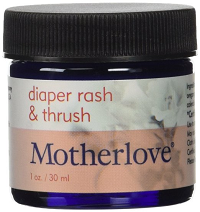 There are a few things you should never do to your cloth diapers - for example, most standard diaper rash creams are terrible for cloth diapers! If you use Desitin on your baby, then put your favorite BumGenius diaper on their bum, you will weep bitter tears as you scrub the Desitin saturated areas with a toothbrush and Dawn dish soap. (Guilty.) The waxes and other sticky substances will stick to the fabric of your diapers and make the insides waterproof! If your baby has a rash, seek out cloth diaper friendly rash creams like Motherlove Organic Balm
 or Grandma El’s Diaper Rash Ointment
 , or better yet, let their tush air out as much as possible between changes.
There are other things that you should never do to your diapers, but they depend on the kind of diapers you have. Follow your manufacturer washing instructions to make sure you don’t use water that’s too hot for the PUL material, and hang your pocket diaper shells and diaper covers to dry whenever possible.
Whichever cloth diaper style you try, I think you’ll find it to be much easier to use than you thought it might be. You’ll be saving money while your baby is little, you’ll be ensuring a better environmental future for them when they’re older, and you’ll keep their skin healthy and soft - what could be better?
Video Tutorial: How To Make Your Own Cloth Wipes And Spray Solution



 25
 0
 0
 298
 0

Thank you for this comprehensive review! I love the idea of using cloth diapers for both environmental and the cost savings, but I felt so lost at where to start. I also have so many people in my ear arguing that they are ‘unhygienic’. But I might just forward this article to them! These diapers are nothing like the old days are they, they are gorgeous! Fashionable even! I love that I can style my bubs nappies and make him look extra cute! I need to decide whether I prefer AI2’s with their removable absorbent parts or pocket diapers. I like the idea of moisture being wicked off my precious babies bottom so I probably will go for the pocket diapers.