 You have a baby on the way, but you don’t have a lot of extra money. There are bills to pay, expenses to cover, and now you are faced with the shocking price of equipping your home to welcome your new prince or princess.
The good news is that you don’t have to be rich to have a happy, healthy baby. Babies don’t care about fancy labels. Most of the expense of having a baby is devoted to impressing other adults.
If you are worried about whether or not you will be able to afford caring for a new baby, check out the following tips to keep your baby expenditure to a minimum. Not only will you be able to have everything you need now, you will also save a few dollars for future needs.
1. Think Secondhand And Clearance
Baby clothes are probably the biggest kick in the baby budget. You can certainly get by with buying only a few outfits, but you will spend a lot of time doing laundry. You can fill up baby’s closet though by looking for secondhand baby clothes. Since kids outgrow clothes so fast, you can always find items that have been gently worn, or sometimes never worn at all.
You can also ask friends and relatives if they have an hand-me-downs they are ready to part with. Where you can’t find secondhand, you may find great clearance sales. Many stores start clearing seasonal clothes long before the weather changes, so you may find warm sleepers on sale in February, or dresses at half price in July.
Clothes aren’t the only thing you can get secondhand. Furnishings, storage, toys, shoes, and baby gear such as swings are often sold as soon as babies outgrow them. Recently, a friend of mine bought a crib and all the matching bedding on an online yard sale for only $30.
2. Buy Mix And Match Outfits
Wherever you decide to buy clothes, choosing several separates that match each other can help spread your wardrobe budget farther. Solid colored shirts that can be worn with different pants or jumpers, plain jeans that can be dressed up with different tops, or dresses that can be accessorized with cute jackets and headbands will make it look like your baby has tons of different outfits. All for the price of 10 or 12 basic pieces!
3. Breastfeed
 Breastfeeding can save several hundred dollars in the first year of baby’s life. It is not necessarily free, especially if a mom needs to pump or decides to store milk. But there are ways to save money even if you need breastfeeding supplies. Breast pumps can be rented rather than bought. In some places, a mother who meets certain income limits can receive a free breast pump if she intends to breastfeed for at least a year.
Another way to save money is to skip the fancy bottles that are advertised as being “like the breast” if you choose to feed pumped milk. Instead, look for any bottle with a slow-flow nipple that is shaped like mom. (which is not always the case with the “special” bottles!) If the cheaper bottle doesn’t work, and you have to buy a better one, at least you tried the cheaper version first instead of vice versa.
4. Do It Yourself
If you have any handicraft skills, there are numerous things you can make or do yourself for a lot less money. If you sew, then bibs, burpcloths, cloth diapers, quilts, blankets, clothes, diaper bags and other cloth essentials can be made at home. You can even repurpose older linens and clothes to save more.
Nursery furniture can be bought second hand (or built) and painted to match your theme. Ask around or look on discount shelves for returned paint or paint leftovers that people no longer need. A little can go a long way and you can have a unique nursery for a fraction of the cost.
5. Buy As You Need
It is very tempting to stockpile your home, diaper bag, and medicine cabinet before baby arrives, thinking that you are being practical. Although it is a good idea to have the basics on hand, stockpiling isn’t always a good idea. For example, you might buy two or three cases of diapers, only to discover your baby is allergic. Or you might spend on pricey baby medicines, and never have a sick baby.
Rather than buying everything in bulk before baby arrives, buy a few sample sizes of things like powder, lotion, wipes and formula. Then put the rest of your money in a savings account so it will be there when you know for certain what you will need.
Also, you can save now by not buying things you won’t need for several months. For example, it isn’t very practical to blow the budget on baby gates and outlet covers before baby is mobile. You may need that cash for diapers and clothes.
6. Stock Up During Pregnancy
This advice may conflicts with tip #5, but there are some things you really can stock up on and be thankful for later. Things like easy-to-prepare meals for mom (who wants to cook from scratch right after having a baby?) are a very practical thing to start buying up over the pregnancy.
Other items can be bought along too, instead of waiting until baby is born. Pricier items such as a good thermometer, blankets, swaddles, a car seat are easier to buy one at a time over the course of several months than all at once at the last minute.
7. Limit Disposable Diapers
 Using cloth diapers during the daytime (or all the time) can be a big expense at first, but they will pay for themselves over time (provided you have a way to wash them). If you don’t want to use cloth all the time, you can still save a few pennies by cloth diapering in the daytime at home, and saving disposables for outings and bedtime.
8. Go Generic
Many products with no brand name, or products sold under the store brand are just as good as their more expensive counterparts. Diapers, wipes, lotions, powder, shampoos, medicines, toys, blankets, clothes and other items are sometimes half the price when you buy a white label brand. You might have to experiment with different store brands but it is worth it if you can save even a few dollars a month.
If you want or need certain brand names, be sure to check for coupons. Enlist the help of friends and relatives. Most will happy to save any coupons they see for baby products to help you out.
9. Cut Out Excess Expenses
In order to make ends meet and have a little extra spending money, you may have to make some parental sacrifices during the first year or two when baby needs more supplies. This is where you cut some grown-up corners. Whittle down expenses such as your cable bill, credit card fees, phone bills, and internet packages.
Decide whether or not things like gym memberships and manicures are worth the price, or if you can do the same thing at home for a lot less. Also, dropping a few activities that require you to travel several times a week will save on fuel. Look to the internet and your library for free entertainment and spend all that extra time enjoying your new baby!
10. Make Your Own Baby Food
When baby starts eating solid food, you can save several hundred dollars a year by making your own baby food. The only thing special about baby food in jars is that it is pureed. If you have a blender or a food processor already, you can do this at home while you are cooking for the rest of the family.
The cost of a small food processor is very reasonable, and it will more than pay for itself! Once baby gets older, you can simply feed them any table food that you are eating as long as it is chopped very fine. When pureeing your own food, you can freeze it in small batches and in just an hour or so, you can have months worth of baby food in your freezer.
11. Prioritize Baby Needs
One of the biggest expenses when having a baby is the nursery. Really, a baby doesn’t need a nursery for several months. They are quite happy to sleep in a cradle or bassinet in any room. If they sleep in mom and dad’s room, then that eliminates the cost of a baby monitor system too.
Other baby items are strictly for convenience. Many of them are great to have, but rather than having one of each (a jumper, a walker, an Exersaucer, a swing) pick one or two and try to find them second-hand.
Also, will baby be just as happy in the cheaper version with less gadgets? Highchairs are one of those things that can be simplified. Wait until baby is old enough to need a high chair, then simply choose the cheapest model. No need for attached toys, several reclining positions, or a designer label. Its just going to get smeared in food every day anyhow.
12. Skip The Classes
Today, it is considered trendy to participate in groups and classes with your baby from day one. Some of these may be free, but a lot of them are not. I’ve seen mothers signed up for everything from baby swim classes to baby music classes, sometimes to the tune of $200 or more per month.
Whereas they sound like good ideas, your baby’s life isn’t really going to be more enriched by being dragged along to several activities per day. Babies are just as happy, and can learn just as much, from one-on-one activities you can do right at home.
Instead of $200 for a music class, you can spend $5 on a CD of children’s songs, or download some free tunes, and sing and dance with your baby at home. Take baby into the bathtub with you or a small wading pool and let her splash and play in the water with you.
You can shell out all the money you want on educational materials designed for babies, and your baby is still going to learn faster from you. Take advantage of your little one’s adoration and the tools and toys you have on hand. You can save that extra money back for classes when your child is older.
13. Look For Double Duty Items
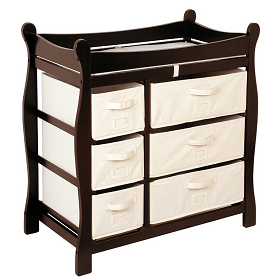 One of the most awesome gifts I received for my daughter was a changing table
 that also serves as a dresser. The top simply folded down for diaper changes. The three drawers are roomy enough for toddler clothes, and the folded-up top is the perfect place to slide extra storage bins.
There are plenty of products on the market that serve double or even triple duty. There are high-chairs that convert later to booster seats, cribs that convert to toddler beds, and potty chairs that convert to step-stools.
Pack n’ Plays are big enough to make comfortable beds, and can be used for a year or two more as safe play areas. Later, they can become toy storage areas.
Another idea is to look for items that will grow with your child, such as standard furniture rather than those marketed specifically for babies. Gender neutral items are also a money saver if you plan to have more children and don’t want to buy all new baby furnishings and gear.
14. Take Care Of Your Supplies
Even if you never plan to have another child, invest a little time to keep clothes, strollers, car seats, high chairs, toys and other items in pristine condition. As your baby outgrows these items, you can resell them and make back at least part of your money.
Maintaining baby gear will also save you from having to replace parts or replace the item altogether. It can also prevent injury to your child or yourself, which could lead to a costly trip to the hospital. So take a little time each day, week and month to stain treat, sanitize, tighten screws, replace batteries, and test latches.
15. Ask For Specific Items
If you are having a baby shower, or if people ask you what you want or need, go ahead and be specific. Don’t forget to tell people that you welcome secondhand items. When people aren’t sure what you really want, you may end up with items you can’t use.
When people know they aren’t expected to buy new, pricey items, you are more likely to get useful items in larger quantities. Instead of hitting up well meaning relatives for a luxury stroller or designer bedding, ask for a few months worth of diapers and wipes, extra clothes, or baby-friendly laundry detergent.
Babies Don’t Have To Break The Bank!
Babies are not really as expensive as people think. All they really need are a few clothes, something to eat, a place to sleep, a safe car seat, a blanket or two, and lots of love. As long as you have an abundant supply of love, you can easily budget the other baby necessities.



 18
 12
 0
 16
 2

Great tips for soon-to-be moms. And yes, the kiddos grow out of clothes soooo quickly……give it a few years before buying the brand-name stuff……they’ll just mess anything up crawling around and playing. As my 3 girls were born several years apart, I couldn’t do hand-me-downs from sibling to sibling. I had friends and family to give us stuff, or as the blog says, request items on baby shower wish list. And as long as the car seat and strollers, and carriers are SAFE, you do NOT need to spend a ton of money. Your kids don’t care about brand names. And we didn’t do any classes either, I spent (as did their father) quality time with them before they started school….all 3 girls love classical music, are artistic, and are well read. No money needed.Put it into college funds for them.