
If you are a parent, or an expectant parent, then you’ve already heard the news - breastfeeding is the best option for your baby. However, sometimes it is difficult, or even impossible, for a woman to breastfeed 100% of the time.
The reasons for choosing to supplement breastfeeding with formula are different for every family. For some women, there may be a medical or physical reasons that prevents her from producing an adequate milk supply. Some mothers may be returning to work, others may have babies with special dietary needs.
Whatever the reason for formula supplementation, it should be discussed with a pediatrician first, to make sure it really is the best option for baby. At the same time however, it should not be an issue that causes a nursing mother any guilt. A mother’s first responsibility is to make sure her baby is well-fed. It is also important to know which formula to use when supplementing the breastfed baby.
There are many brands and types of formulas available, so it may be daunting to a first-time bottle-feeder when faced with the massive selection. Although all babies are different, with unique likes and needs, here is a basic guide to some of the best formula options on the market. But first, you need to know a little more about formula.
Powdered or Prepared Formula?
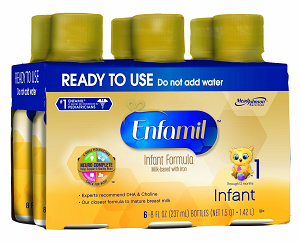 Before you even begin searching for brands, it is important to know how formula is sold, and why it matters. Formula is generally sold in two different types - powdered or liquid. Liquid formula
 is pre-prepared. It is very convenient, since you just pour out the exact amount you need without having to mix anything.
Many hospitals use pre-prepared formula because it is more sterile. It can be bought already packaged in disposable nurser bottles, which means very little risk of contamination. This is a great option for preemie babies. It is also sold in larger containers for older babies.
The biggest pro of pre-prepared formula is that it is the ease-of-use. You don’t have to worry about mixing the wrong amounts, which makes it very friendly for babysitters! It is also the safest option when there is no access to clean water. It can also make traveling with baby stress (and mess) free.
On the negative side, after it is opened, liquid formula has to be used very quickly. It is also more expensive. If a baby is receiving only one or two bottles per day, then there may be a lot of spoiled formula and wasted money.
 Powdered formula is the more affordable. It costs less per container to buy, and it lasts for several weeks after being opened.
When using powdered formula, it is very important to follow either the exact mixing directions listed on the container, or the instructions given by a pediatrician. Anyone mixing the bottles must use sterile water, and must wash their hands before preparing the formula. However, once a mother knows how many bottles her baby will use in a day, she can pre-mix them and store them in the refrigerator. There will be instructions on the container for how long a bottle can be mixed before it needs to be eaten or thrown away.
Another, less common type of formula is concentrate. It requires mixing like powdered formula, but is liquid, making it neater than powder. The price falls in between powdered and liquid formula in most cases.
Regular, Lactose-Free, Soy, Organic?
Once you’ve decided whether or not to go with liquid or powdered formula, the next question is which type? Most formula is made from a cow’s milk base. Whereas most infants do well on this type, a lactose intolerant baby may need lactose-free formula or soy formula.
All formulas need a special balance of carbohydrates, fats, proteins, vitamins and minerals to make them nutritionally balanced. What makes the difference in brands is the ratio of these basic elements, as well as the amount of synthetic nutrients, chemicals and other additives.
Some of the varieties of formula on the market include:
- Cow’s milk base
- Goat’s milk base (in some countries)
- Lactose Free
- Lactose reduced
- Soy base
- Organic
- Hydrolyzed formula
- Preemie formula
- Milk fortifier
This is where a pediatrician’s advice is needed. If a baby has no health issues, then a cow’s milk based formula is usually all that is needed. A baby that does not tolerate lactose well (very rare) may be placed on lactose-free, lactose-reduced, or soy based formulas. If the intolerance to the proteins is so severe that even soy milk irritate’s a babies digestive system, hydrolyzed formula (which has the proteins broken down farther than regular formula) may be prescribed. These “hypoallergenic” formulas may even be recommended if doctors suspect a risk of milk intolerance based on family health history.
A doctor may suggest that a premature baby or one with weight-gain issues be supplemented with special formula designed to provide extra nutrients. Almost all formula brands now have a version that is designed for the needs of preemies, and some of these are divided into special needs formulas. For example you might need a preemie formula especially processed for babies with severe acid reflux.
With more parents making healthy choices, organic formulas are gaining in popularity. Although no organic formula is perfect (many still contain palm oil, which is difficult for babies to digest), they are still considered a better alternative to mainstream formulas. Organic formulas are created using animal and plant products that have not been exposed to chemicals or antibiotics. I suggest reading this article for more information about additives in organic formulas, as well as data about the big companies behind the little brand names.
So, Which Formula Is Best?
The answer to this question depends on your baby and how often you will be supplementing. There is no universal best formula for all babies, but there will be a best formula for your individual child.
According to Mayo Clinic, as well as many health care professionals, the best formula for a full-term baby, with no indications of lactose intolerance, is a cow’s milk based formula labelled for the specific age range of the baby. Whether or not you choose organic is up to you, as there are no studies as yet that have proven babies do better on one type or the other.
Although generic brand formulas are required to meet the same standards as brand names, they may have extra ingredients that are unnecessary or may use processing methods that don’t fully break down the proteins, making them harder for your baby to digest.
Some generic brands may also have less vitamin and mineral amounts. For a baby that is receiving mostly breastmilk, this may not be an issue. If a baby is receiving more formula than breastmilk, it is very important to make certain that the formula is fortified with iron.
Here is a brief look at some of the biggest baby formula brands in the US. Some of the parent companies of these brands also produce formula brands (sometimes under different names) in other countries:
Gerber Good Start

Good Start formula is 100% whey, which makes it very easy to digest. Other formulas have a balance of whey and casein, (as does breastmilk). The casein can sometimes curdle in the baby’s stomach, leading to gassiness and other upsets.
Gerber is owned by the Nestles Corporation, and their formulas are marketed worldwide under different names. Mothers I know who have used Good Start were happy with how easily it was accepted by breastfeeding babies.
Of the powdered formulas, Good Start is one of the least “clumpy”. It mixes much easier than Enfamil or Similac, which helps ensure that your baby is getting all the nutrients from each bottle.
Enfamil

For my first daughter, I used Enfamil for six weeks to increase her weight gain. I started with the standard Enfamil N (Newborn) liquid, but wasn’t happy with the results. Not only did she not gain weight, it caused serious acid reflux. I switched to Enfamil for Supplementing, and it was much easier to digest.
Enfamil provides several different formulations, including a preemie version and Nutrimigen for babies with food allergies and sensitivities. I asked other mother’s for their feedback on Enfamil, and over half agreed that it was fine for supplementing occasionally, but caused colic more often if fed frequently.
Similac

When my twins were born, they weighed just four pounds and lost weight rapidly. They received Similac NeoSure (preemie formula) in the hospital, and I continued to supplement with it until they were 8 weeks old.
Unlike the Enfamil, Similac did not cause colic issues or acid reflux. However, myself and other mothers who have used this brand found that it caused serious issues with constipation, even when given only a few times a day in small amounts.
When the babies were older, I bought powdered Similac to supplement when I had to be away for awhile. Both the NeoSure and the older infant formula have a very pungent odor and the babies did not like the taste. Other mothers in my twin parenting group agreed that it made supplementing difficult, since babies didn’t like going back and forth between the formula taste and the breastmilk. Mixing the formula half-and-half with breastmilk did help, but that may not be practical for some mothers, and it does not relieve the constipation issues.
 A major benefit of Similac is that it is sold in pre-packaged, sterile nurser bottles. For the first few weeks, this made feeding preemie babies (especially on-the-go to stressful appointments) very easy. It also made monitoring intake exceptionally easy, and there was never any worries about exposing the babies inadvertently to bacteria.
For a baby with weight -gain issues, Similac NeoSure was better than the Enfamil version.
Hipp and Holle
These two organic brands are European in origin. Recently, they have grown in popularity in the US. Although neither brand can be purchased in America, many parents are buying these formula brands online.
Although it is pricey to import foreign products, the parents who use these brands, especially those who use Hipp, say it is well worth the cost, since the smell, texture and taste is similar to breastmilk. They also report that babies do very well on both brands, and there are almost no issues with switching back and forth between bottles and breast.
Baby’s Only

A US organic brand owned by Nature’s Own, Baby’s Only is a popular choice for parents who want something better than the organic versions of mainstream brands such as Enfamil, yet who can’t afford to import formula from Europe.
Baby’s Only is NOT marketed as an infant formula, but rather a toddler formula. However, nutritionally it meets all the requirements of an infant formula. Our pediatrician recommended Baby’s Only if we chose to continue supplementing, since it is easy for babies to digest and contains the least amount of chemicals and synthetic ingredients of any US organic formula. (It does still contain some ingredients that are illegal in Europe and other countries.)
Supplement With Love
Its not easy hunting down the best formula for your baby. It may involve a lot of research, and a lot of experimentation. What works for one baby simply will not do for another. For most babies, any non-soy based formula is a good start. You can start with the most affordable version that fits your baby’s needs, or base your choice on a doctor’s recommendation. Never be afraid to change brands if you feel like it is causing your baby discomfort (even if it supposedly the “best” formula).
Supplementing a breastfed baby doesn’t have to be confusing or difficult. Just listen to your baby!



 368
 53
 0
 277
 11

This is such a great article! When I had my baby I knew I wanted to breastfeed as exclusively as possible. However, it was not easy getting started and I had a very good eater! I wound up having to supplement from time to time and especially as he got older because my supply just couldn’t keep up. I supplemented with Similac Advance and was very happy with it!
I am having to start this now for my 9 month old son. How much formula do I need to add to my breastmilk?
This is great information, I bottle fed all of my children and the liquid (Pre-made) formula was only available with the last two. There is a large age gap between my first 4 and my last 2 children so I opted to stay with the powder because I hadn’t heard much about the other one. Although my youngest two children are still young (1 and 3) my oldest daughter who is 22 is about to have a baby that will also be bottle fed. I will pass this information on to her because it’s a very comprehensive list and there are so many more options these days- thank you 🙂
Another super post! Thank you so much for sharing these tips on choosing the best baby formula. There are just so many choices, it’s all so overwhelming. Powdered or prepared formula, organic vs. not organic…This list touches on and breaks down quite a few options. Thank you so much for touching on more than just prices, but also discussing shelf life, additives, and specific brands, this is awesome!
Hi Jayme,
I have never heard about concentrate formula before, but it seems like it would be another good option.
I had so many problems getting my daughter to start drinking bottle milk because she absolutely did not like the taste. Eventually I had to try mixing the breast milk with the bottle milk and even though she still protested she would drink it. She also started weaning early as well because she didn’t like the formula very much.
Enfamil has been around for a long time cause that is what my mum used to feed me, and it was the option that I used with my daughter as well, and fortunately did not really notice much colic.
Thanks for this great article, I will be sure to pass it along to a couple friends who are expecting soon.
Love and light.
Vivia
if you decide to stop breast feeding, would it be fine to keep using the same similac for supplementing formula or do you need to switch to a similac advance (regular)?