
Is your energy bill starting to get you down? Well, here’s some good news for you. There are a few things you can do to keep your energy costs low and that don’t require expensive home makeovers. These tips combine common sense approaches, overlooked energy-consumption items, and a few simple home improvement tasks whose money saving potential far outweigh the costs. Let’s get started!
1. Simple Fixes And Energy-Saving Habits
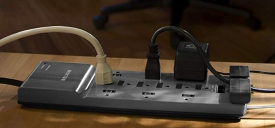 Phantom loads: do an “energy sweep” each night to turn off all DVD’s, televisions, stereos, computers, game consoles, and various kitchen appliances. Shockingly, these items make up 75% of the energy used when they’re turned off! Plug all of these items into a power strip
 , and get in the habit of turning the strip off when you are no longer using them.
- Keep your vents open and clean: you’d be surprised how many people crank up the air conditioner or heater simply because they forgot to open their vents. It’s a dumb mistake that anyone can make. Also, keep your vents clean especially if you use an air filter so that the clean air flow does not get disrupted.
- If you own a laundry machine and dryer, here’s a dryer tip: don’t overfill your dryer with clothes (as clothes dry faster when there are fewer of them) and use dryer balls to help facilitate the drying process. Another solution you might want to consider is air-drying your clothes. If you have enough room around your house and live in an area with the right kind of temperature for drying clothes (i.e. not in a region where you have 6 months of rainy season), then air-drying clothes will save you a lot of money.
2. Seal Air Leaks Around The House
The cost to seal cracks and air leaks is around $30-50. The savings per year can be around $50-170. That’s a 66% to 466% return on investment. The benefit of comfort and clean air is just as great. If you consider the cumulative effect of all the air leaks in your home, it might be equivalent to having an open window all year long. So it’s best to take care of this often overlooked item.
You can use foam or caulk, inexpensive items easily found at your local hardware store. These do a great job at sealing cracks where cold or warm air escape - holes in walls, around doorframes and windows, or basement wall where wooden frame makes contact with the cement or block.
3. Wash Clothes In Cold Water
If you own a laundry machine, bear in mind that 90% of its energy usage has to do with hot water. That’s a lot of energy use. Fortunately, the solution is easy: wash your clothes with the cold water setting whenever possible. Problem solved!
4. Wash Clothes During Off-Peak Hours
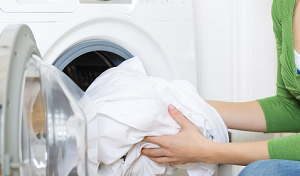 As a follow-up to the last tip, you might want to reconsider when to do your laundry. In some areas incentives are offered to households who use energy-consuming appliances during off-peak hours.
Personally, I always run the laundry machine or dishwasher after 8:00 pm. This might not apply to everyone as not every local government provides incentives (or charges less during off-peak hours). But if it does apply to you, this simple act can cumulatively save you money in the long run.
5. Use A Crock Pot Now And Then
On a hot summer day, the last thing you will want to do is cook with an oven or stove. Not only does that require a great deal of energy usage, it also heats up your house and tempts you to crank up your air conditioner (costing you more money). Crockpots are great. They use up very little energy as compared with an oven, they don’t heat up the house, and because they are slow cookers, they free you up to do other tasks while your meal is cooking.
6. Use Energy-Efficient Light Bulbs
Replace your incandescent light bulbs with either LED’s or CFL bulbs. LED’s cost more than CFLs but they last much longer and use 90% less energy than incandescent bulbs. LED’s are directional lights, making them more suitable as cabinetry lighting than table lights. However, newer LED lights come with diffusers making them more suitable for table light usage.
CFL lights use up to 78% less energy than incandescent bulbs. As table lights, they have been the most favored alternative since their lighting tends to be closest to incandescent bulbs. You can simply replace your 100W incandescent bulb with a 23W CFL or your 60W bulb with a 13W CFL. The only drawback is that CFL bulbs contain mercury, a dangerous heavy metal. This poses a problem only if a bulb breaks. It is very difficult to clean up when shattered. You also have to contact your local waste management company to learn how to properly dispose of your used CFL bulbs (don’t just put it in the trash due to its mercury content). But as long as you are careful when handling them (as you would with an incandescent bulb), CFL’s are a great alternative to your regular old-fashioned bulb.
7. Program Your Thermostat
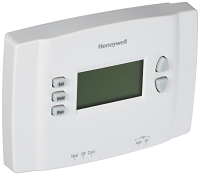 It might cost you around $50 to buy a programmable thermostat but this can also shave as much as 20% off your utility bill each year. If your house is unoccupied during the day, you can simply program your thermostat to allow temperatures to get colder why you are away. You can program it to lower or raise temperature to suit your sleeping and waking needs. It’s worth the investment in both cost and comfort.
8. Use Low Flow Shower Heads
Regular shower heads put out between 4-5 gallons of water each minute of use. That’s a lot of water. If you purchase a low flow showerhead, you can use only 1.5 gallons of water per minute. This gives you plenty of water flow while drastically reducing your water usage.
9. Check Your Refrigerator And Freezer Temperature
This is an easy fix for an easily overlooked problem. Refrigerators and freezers don’t have to be colder than necessary to fulfill their functions. That’s money down the drain. A fridge should run between 37 to 40 degrees (F) and a freezer should be at 5 degrees (F). Colder settings mean wasted money.
10. Insulate Your Attic
It might cost you around $300 to insulate your attic, but it will save you 30% on your energy costs. The payback time will be up to five years, but the comfort of having more insulation in your home will be more or less immediate.
Upgrading your appliances to more energy-efficient ones, going solar, or doing a total home makeover to make your house more energy-efficient can be beneficial to your lifestyle and the overall environment for the long-term. These modifications can also be costly (though worth it if you can afford to do so). Until then, however, you now know that there are much simpler and effective ways to save money on your utility bills.



 0
 0
 0
 0
 0

You have compiled some great tips for saving money on utility bills! I’m definitely going to try to do some of these things. I do try to wash with cold water as much as possible, I had no idea about washing after peak hours. I’m definitely going to look into that because I’m always up at night anyways lol. I’m also going to try unplugging all of my electronics. I heard that having all electronics off also enhances the quality of sleep. I’m going to try a few of these tips. Great list!