Many people may think that teaching a child to read before school is unnecessary and even counter-productive, but Glenn Doman author of How To Teach Your Baby To Read argues differently. With a background in rehabilitating brain-injured children the author has studied infant children for years and says that studies indicate that it is harder for children to learn to read at age six.
It is a well-known fact that children who are exposed to languages at a young age pick them up quickly and adeptly because studies have shown at that from birth to age five every child has a near miraculous ability to learn language and communication. Doman argues that this is the reason our children should learn to read at this stage when it is easiest for children to acquire language.
Read To Your Child
A good place to start is to read to your child. Nearly every writer on the topic of literacy advocates that children should be read to everyday from birth. It does not matter what is read to newborns, whether you invest in a set of black and white board books or read passages of Shakespeare, the most important thing for a newborn is that they hear your voice and begin to recognize the patterns of speech and communication. As children grow older they may seem more interested in chewing books, tearing pages, and other destructive activities but this is an important part of their development. They are learning about the book as a physical object, how to use it and manipulate it.
Try to find age appropriate books for your child on topics that interest them. Try to engage your child in the reading process through fun activities or questions.
Jim and Elena at their blog Children Learning Reading stresses the importance of teaching your toddler to start reading at a young age to encourage vocabulary and comprehension skills.
Expose Your Child To Words
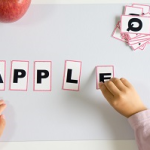
Another thing that many advocates of early literacy mention is creating a print rich environment. Children naturally begin to recognize words from signs as they drive in the car. Children learn from the environment around them. I can look around my house and see plenty of pictures on the wall, but no letters. I think it is time to change that. Discover ways to make your child’s world a text rich environment. Put the word “family” in big cut out letters above family pictures on the wall. Put the alphabet up. The Doman method is just an aggressive form of exposing your child to words as he advocates teaching children to memorize words with big red flashcards.
Make The Learning Fun
Whether you decide to follow the Doman program that urges parents to teach their kids to read with flashcards or a more traditional approach remember that the happiness of your child is the most important thing to achieve. Engage them in activities that help them recognize letters and words. Bake cookies in the shape of letters. Do alphabet crafts. Sing songs. Visit they library, but remember if your child is not enjoying the process of learning then something is wrong. Most detractors from teaching toddlers to read often fear that encouraging a child to read too early will make them lose their love for learning. This is something that as parents we should try to avoid. There are many resources, books, blogs, and people that can help us provide learning opportunities that our children enjoy and are interested in, especially in the topics of literacy.
Parents, click here for a free presentation to easily teach your toddler to read.


 18
18 13
13 12
12 10
10 1
1
I am a certified special education teacher with extensive training in reading! I’m also the parent of two children and two grandchildren. I agree with this site! If I had to make a list of how to encourage a toddler to read, it would be: 1) Talk to your child in real words, not baby talk. 2) Read aloud to your child in utero, as a baby and never stop until as my boys did, they rip the book out of your hands because you will only read one long chapter per night and they want to read more! 3) Label your house with words, i.e. chair, table, book, toy box, etc. 4) Point out environmental print (cut out words from packaging along with the picture), find relevant words in magazines, point out signs (most really little kids will recognize the McDonalds sign from an early age!) and 5) Keep chunky little board books around with interesting pictures starting with one word per page. Refrigerator magnets are fun to start learning about letters. Always start with the child’s first name. Make little books of just photos of the child’s immediate family members that you can flip through wtth your child and name the photos. Start by always pointing to the words you are reading in the little board books and then encourage your child to point to the words. An early form of reading is your child “reading” a book to you just because she’s memorized it so encourage this. Start with all of this and your child with be on a great path to success!
I totally agree with the article! I did daycare when my youngest was a small toddler and it also helped to have big alphabetical letters and numbers on my playroom wall. We went over them a lot. Also when we are out, if we say signs or poster boards we would go over them. For instance when we came up to a stop sign my son would see it ahead of time and say the word and spell it out loud.